Subscribe to stay ahead with expert insights on ESOPs, smart ownership strategies, and more!
Editor's Note: Recruitment today is as much about candidate experience as it is about finding the right talent. In this article, we explore practical ways recruiters can improve candidate follow-up, reduce ghosting, and build stronger engagement throughout the recruitment process. From structured communication cadences to the smart use of AI-powered tools, these insights are designed to help hiring teams create a more transparent and respectful hiring journey.
Introduction
If candidates remember one thing about your recruitment process, it’s how you communicated with them. Not your tech stack, not your careers page, but your responsiveness. And right now, the bar is low. In one 2024 report, 38% of candidates said they’d been ghosted by an employer in the last year, and 34% assume they’d been ghosted after just one week of silence. That silence quietly destroys your candidate experience and your brand.
The upside here is that you don’t need any massive overhaul to fix this, but only a clearer communication rhythm, better expectations, and the right AI-powered tool for recruiters to take the busywork off your hands.
Why Follow‑Up Is the Heart of Candidate Experience in Recruitment
Every stage of the recruitment process is an opportunity to either build trust or erode it. The “vast majority” feel ghosted after two weeks of silence. This is the window where they mentally check out, accept other offers, or share negative stories with peers.
Consistent follow‑up improves the candidate experience in recruitment because it:
Reduces anxiety and guesswork (“Did they even see my application?”).
Signals organisational maturity and respect.
Keeps strong candidates warm through inevitable internal delays.
In a market where bad experiences travel fast, good communication becomes a quiet superpower.
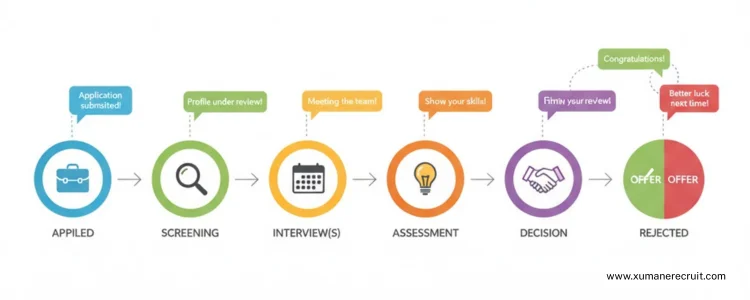
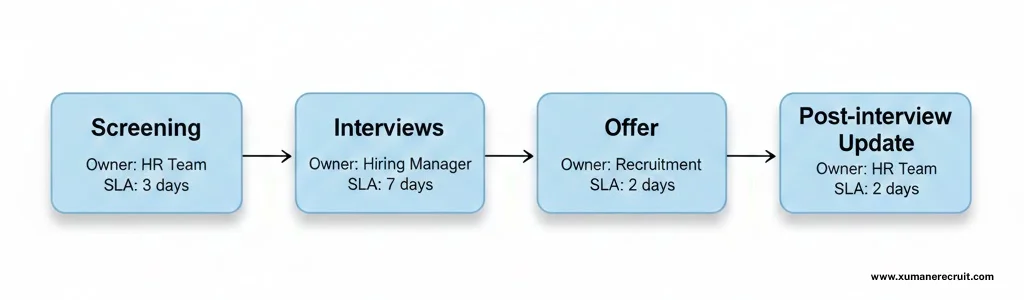
Step 1: Make Your Recruitment Process Explicit
Many teams have a recruitment process in their heads, but not on paper. That’s exactly how candidates fall through the cracks.
Owners: Who is responsible for updates at each stage (recruiter vs hiring manager)?
SLAs: Maximum time a candidate should wait without hearing from you (for example, 2 to 3 business days after an interview).
Then, translate this into outward-facing expectations like:
On your careers page or first email, tell candidates what the process looks like and when they can expect updates.
Use templated messages to reinforce those expectations at each step.
This one change alone can dramatically improve the candidate experience, because candidates no longer feel trapped in a black box.
Step 2: Use AI Powered Tools for Recruiters to Handle the “Always On” Updates
The hardest part of great follow‑up is not knowing what to say; it’s finding the time to say it, consistently, across dozens of requisitions. That’s where an AI-powered tool for recruiters earns its keep.
Modern tools can:
Send instant, branded acknowledgements when someone applies.
Auto‑draft personalised “you’re still in process” updates based on stage and age of application.
Generate respectful rejection messages that don’t sound like bland spam.
Summarise interview notes into a short, candidate‑friendly update for you to tweak and send.
Faster processing plus automated communication means fewer candidates sitting in silence and a smoother candidate experience in recruitment end‑to‑end.
The key is to treat AI as a drafting assistant, not an autopilot:
Let it propose wording and timing.
You add a line or two of context where it matters (later stages, silver‑medalist candidates).
Hit send in minutes instead of writing from scratch.
Step 3: Design Follow‑Up Cadences, Not One‑Off Messages
Follow‑up becomes sustainable when you design cadences:
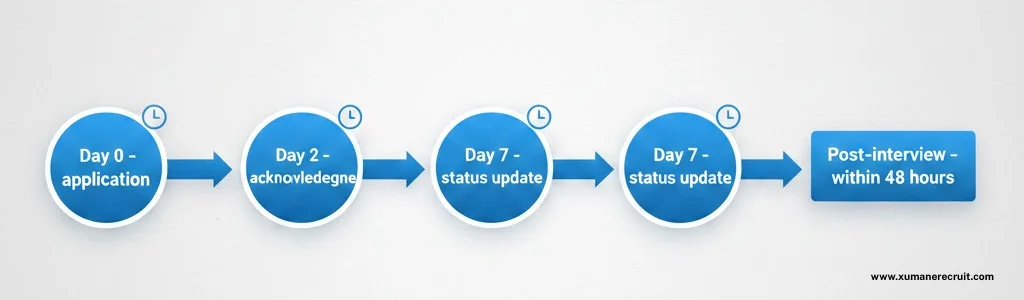
After application: Immediate confirmation email with a rough timeline and what’s next.
While screening: A check‑in if they haven’t moved stage within 5 to 7 days (“We’re still reviewing your profile”).
After interviews: A “we’re debriefing” note within 24 to 48 hours, even if you don’t have a decision yet.
At rejection: A respectful closure email, ideally with a human touch for later‑stage candidates.
An AI-powered tool for recruiters can watch these timelines for you and suggest or send the right message at the right moment, based on where each candidate sits in the recruitment process. You stop relying on memory and endless spreadsheets; the system nudges you before candidates feel ghosted.
Candidate‑experience benchmarks highlight that organisations that communicate proactively at key stages see significantly higher satisfaction and are more likely to retain candidates’ interest even when they aren’t selected.
How to Conduct a Recruitment Audit for Better Hiring
Step 4: Treat Rejected Candidates as Future Advocates
Not every candidate will be hired, but every candidate will have a story about you. Multiple reports show that ghosting or cold rejections are a major driver of negative reviews and brand damage, and that respectful rejections keep the door open for referrals and re‑applications.
To strengthen follow‑up at this most sensitive point:
Avoid generic “do not reply” rejection templates whenever possible.
For early stages, a concise, polite note is fine; for later stages, add one or two specific strengths you saw.
Invite strong candidates to stay in your talent network or to consider future roles.
Here again, an AI-powered tool for recruiters can read interview and screening notes, draft a tailored message that acknowledges something specific about the candidate’s profile, and let you quickly review and personalise. That’s how you scale a humane candidate experience in recruitment without writing every email from scratch.
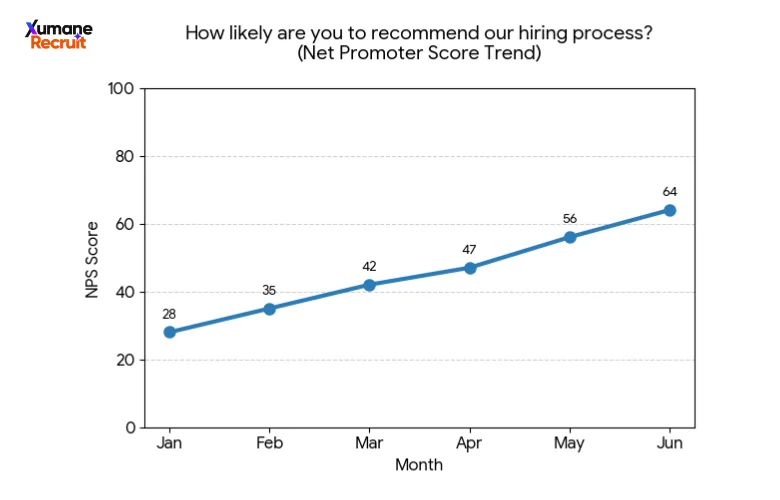
Step 5: Measure Candidate Experience and Close the Loop
You can’t improve what you don’t measure. To keep raising the bar:
Send a short candidate‑experience survey after closure (yes or no), asking about clarity, speed, and tone of communication.
Track metrics like response times, average days in stage, and open rates on follow‑up emails.
Use analytics from your AI-powered tool for recruiters to see where candidates most often stall or drop out.
Recent candidate expectation research emphasises that candidates care as much about how they’re treated as whether they get the job, and that clear communication is one of the top drivers of a positive experience. When you can see where communication lags, you can adjust SLAs, templates, or automation rules and watch the impact over time.
Frequently Asked Questions
Aim for at least one touchpoint every 5–7 business days during active stages of the recruitment process. Even a brief “We’re still in review, here’s the expected timeline” improves the candidate experience and reduces assumptions of ghosting.
It doesn’t have to. The best tools draft messages based on your tone and context, then you add a quick personal line before sending. Candidates get timely, relevant updates without you sounding like a bot.
Silence. Survey data shows that more than a third of candidates feel ghosted after one week with no update, and nearly two‑fifths have been ghosted by an employer in the last year. Structured, even brief, follow‑ups beat silence every time.
Share simple stats: poor candidate experience leads to drop‑offs, declined offers, and reputational damage, while better communication correlates with higher acceptance rates and stronger pipelines. Then agree on shared SLAs (e.g., feedback within 48 hours) and use AI to remind them.
Start small: map your recruitment process, set basic communication SLAs, and deploy an AI-powered tool for recruiters to handle acknowledgements and weekly updates. Once that foundation is in place, layer in better interview feedback and more personalised rejections.



 Tushit Pandey
Hiring right is the most important skill. After all, you bet on people, not on resumes and strategies.
Tushit Pandey
Hiring right is the most important skill. After all, you bet on people, not on resumes and strategies.