Subscribe to stay ahead with expert insights on ESOPs, smart ownership strategies, and more!
Editor's Note: In today’s competitive hiring landscape, candidate experience has become a key differentiator—not just a nice-to-have. This article explores how clarity, speed, and thoughtful use of agentic AI can transform hiring journeys into meaningful interactions. The insights shared here are designed to help talent acquisition teams build trust, reduce drop-offs, and create a lasting positive impression on every candidate.
Introduction
As a TA professional, you might have come across team members who would have ghosted you during the hiring process. Why do you think that might have happened?
Most candidates leave because of confusing job posts (or requirements), lengthy interviews, no timely updates, or awkward interviews.
What can you do to avoid this?
Well, firstly, the good news is that the bar is still low. Yes, that’s the good news!
So, it can be pretty easy to avoid undesirable situations and facilitate a great candidate experience (whether they get selected or not)!
If you can improve candidate experience with clarity, speed, and the smart use of tools like agentic AI Interview Software , you can stand out quickly without hiring a huge team.
Keep Transparency at the Core
The AI application experience starts before a candidate ever speaks to you.
To improve candidate experience at the very top of the funnel:
Make job descriptions outcome‑focused. Don’t just send out a list of tasks.
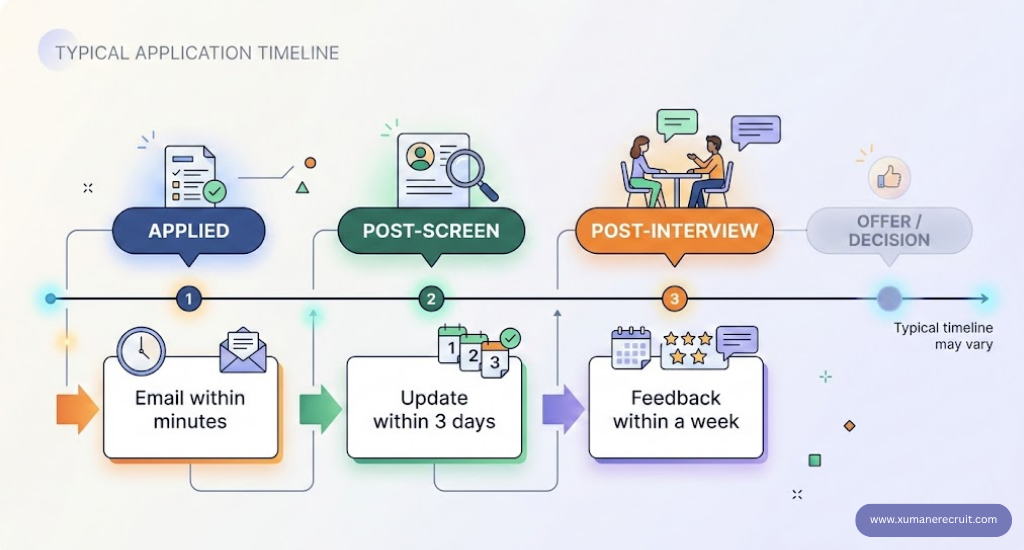
Clearly explain the stages in your process and approximate timelines.
Keep application forms such that fewer fields are required to be filled in to complete the application, contributing to lower drop‑off rates.
Remember, candidates are evaluating you as much as you’re evaluating the candidate. When they know how the interviewing process works and what’s coming next within it, it helps build a foundation of trust with the candidate.
Fix The Communication Gap With Speed And Consistency
Slow or inconsistent communication can trigger frustration in candidates.
Slow or inconsistent communication is the single biggest source of frustration. In fact, analyses of withdrawn candidates show that 62% left due to poor communication. Also, note that 94% of candidates want to get interview feedback (even if it’s negative), but only 41% actually receive it.
To improve candidate experience without overwhelming recruiters:
Set clear SLAs: For example, acknowledge every application within 24 hours. Update within 3 to 5 business days after each interview, and provide closure within a week of the final stages.
Use agentic AI Interview Software or virtual assistants to draft and send timely status updates (“You’re still in process,” “We expect decisions by X date”) instead of leaving people guessing.
Automate reminders for feedback so interviewers respond while impressions are still fresh.
Agentic AI systems can watch your pipeline, detect when a candidate has been idle too long, and nudge both recruiters and managers to respond. This helps turn communication from a manual effort into a well-managed workflow.
Use Agentic AI To Personalise the Interview Process At Scale
Candidates want to feel seen. Agentic AI Interview Software can help humanise the AI application experience by doing things your team doesn’t have time for at scale. Some tasks that the software can take over include:
Tailoring outreach and process updates to each candidate’s skills and interests.
Powering chatbots that answer common questions 24/7 and routing complex ones to humans effectively.
Generate interview guides that align questions with the role and reduce random questions and bias during interviews.
When done right, this type of AI implementation doesn’t replace humans. It only supports them in the right manner. The system can transform AI application experience from static forms and generic emails into an interactive journey where candidates can see progress and feel guided through each step.
How to Make Interviews Structured, Fair, And Respectful
To improve candidate experience at the interview stage:
It’s best to use structured questions and scorecards. This helps evaluate candidates on the same competencies.
Leverage agentic AI Interview Software to generate role‑specific interview guides. This helps keep interviewers stay on track.
Prepare interviewers with the right context. This includes resumes, notes, and key topics so candidates don’t have to repeat the basics at every stage.
Tools that combine agentic AI with scheduling and feedback workflows can ensure interviews start on time, cover relevant ground, and end with clear next steps removing any roadblocks that hurt the company's brand or credibility as a whole.
Start using AI interviews to simplify hiring and scale your recruitment effortlessly.
The Feedback Loop: What You Can Learn From Every Candidate
Improving candidate experience is not a one‑off project. It evolves and gets better through the feedback loop.
Practical steps that can be adopted immediately into your recruitment process:
Ask candidates for a short survey after their process ends (whether they were hired or not). Focus on clarity, speed, fairness, and overall satisfaction.
Use AI tools to analyse open‑text feedback and detect recurring themes like communication delays, confusing assessments, or interviewer behaviour.
Adjust SLAs, interview training, or messaging based on feedback.
Many benchmark programmes consistently show that when candidates rate their experience as “great,” around three-fourths say they would apply again, refer others, or maintain a positive relationship with the employer, even if they weren’t hired.
That’s long‑term pipeline fuel you can’t buy with ads alone.
Frequently Asked Questions
Not if implemented well. Agentic systems can handle repetitive tasks like status updates, scheduling nudges, basic Q&A so your team has more bandwidth for personalised conversations. The goal is to free humans from admin, not remove them.
Start with clarity and communication: define your stages, publish timelines, and commit to regular updates. Even small changes around speed and transparency can significantly improve candidate perception, as studies on communication gaps show.
It’s critical at the very start (applications and acknowledgements) and at transition points between stages, where candidates are most likely to feel forgotten. AI can keep those edges smooth by ensuring no one goes too long without an update.
Yes, especially when it supports structured interviews, consistent screening criteria, and anonymised early reviews. But AI must be monitored and audited; human oversight is still essential to avoid new forms of bias.
Track simple metrics: time to first response, time between stages, survey scores, and drop‑off rates. Over time, you should see fewer candidates leaving mid‑process and more referrals and re‑applications are strong signs that your experience is actually improving.



 Tushit Pandey
Hiring right is the most important skill. After all, you bet on people, not on resumes and strategies.
Tushit Pandey
Hiring right is the most important skill. After all, you bet on people, not on resumes and strategies.