Subscribe to stay ahead with expert insights on ESOPs, smart ownership strategies, and more!
Editor's Note: Every time a new hiring technology appears, recruiters hear the same threat - “This will replace you.” The same was said about job portals, applicant tracking systems, and LinkedIn. None of them removed recruiters. They changed what mattered.
With AI tools for recruitment advancing quickly, that question isn’t theoretical anymore. AI is doing the same thing but more dramatically. The question is no longer whether AI can screen resumes or schedule interviews. It’s whether companies understand what human recruiters really bring to the hiring table.
The fear comes from what AI already does well
AI has entered recruitment through the most visible pain point, that is Volume. Hiring teams are drowning in applications. A single job post on a major platform can receive over 250 applications on average. So when most people ask whether AI will replace recruiters, what they really mean is, will the software take over the work humans do in bringing candidates into an organization?
No recruiter can realistically read that many resumes with attention. AI resume screening feels threatening as it handles the first layer faster and with fewer mistakes caused by fatigue.
It’s also true that recruiters only spend six to eight seconds on an average resume during manual screening. When AI can process that same data with consistent logic, it looks like a replacement. But what it’s actually replacing is rushed, low-quality screening & not the recruiter.
In recruitment, AI is already a big presence:
Using AI for recruitment has accelerated resume screening
AI chat tools are pre-qualifying candidates
Predictive analytics are guiding sourcing strategies
Even so, saying AI will fully replace recruiters oversimplifies how hiring actually works. Replacement implies bots making final decisions. This is something recruitment professionals rarely give up, and most companies shouldn’t either.
Why faster hiring doesn’t mean better hiring
Companies often adopt AI because they want to hire faster. And yes, AI can reduce time-to-screen and time-to-interview dramatically. But speed alone doesn’t predict success.
According to the US Department of Labor, a bad hire costs at least 30% of the employee’s annual salary once you account for recruiting, training, lost productivity, and replacement. AI can tell you who matches a job description. It cannot tell you who will succeed in your company. That difference is where recruiters still matter.
There are parts of the hiring process where AI has real limitations, such as:
Evaluating culture fit
Discerning motivation and ambition
Reading subtle communication cues
Managing negotiation and offers
Understanding organizational context
AI can summarize patterns in candidate answers. It cannot yet gauge whether a person will thrive in a specific team environment, or how they’ll respond to internal politics, leadership style, or ambiguous challenges. Those judgments still require human insight.
What AI in the recruitment process is actually good at
AI is exceptional at pattern recognition. It can compare resumes against job requirements, identify similar past hires, predict which candidates are likely to accept offers, and automate early conversations.
Organizations that use AI for recruitment report having more time for productive work.
Time to talk to candidates.
Time to understand hiring managers.
Time to evaluate soft signals that don’t appear in data.
AI doesn’t remove recruiters from the process. It pulls them out of the mechanical parts so they can focus on the human ones.
The part AI still cannot replace
Hiring is not just a matching problem. It’s a trust problem.
A resume cannot show whether someone will push back when needed, collaborate under pressure, or stay motivated when things go wrong. A chatbot cannot negotiate expectations, reassure a nervous candidate, or sense when someone is hesitating.
That human layer matters more than people realize. Research shows that 26% of candidates rejected good offers due to poor communication or unclear job expectations.
People don’t join companies. They join stories they believe in, and humans usually tell those stories.
A recruiter picks up on a slight indication in a candidate’s response, not in a resume or a score, but in the phrasing about past work challenges. That nuance can flag something important about resilience or teamwork that no algorithm can accurately judge yet.
What actually changes when you use AI tools for recruitment
Before AI, recruiters spent most of their day sorting, scheduling, and chasing responses.
After AI, those tasks happen automatically. What remains is the part that no machine can do - Judgment.
The recruiter becomes less of an administrator and more of an advisor to candidates and to hiring managers. They interpret data. They handle nuance. They prevent bad hires that look good on paper.
The real future of AI and recruitment
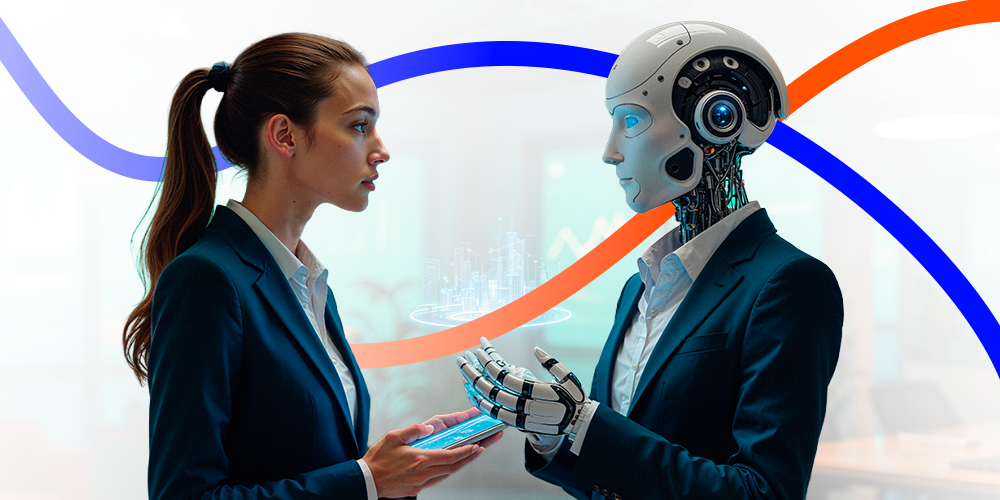
The best hiring teams in the next decade won’t be fully automated. They will be AI-assisted and human-led.
AI will handle:
Volume
Consistency
Prediction
Recruiters will handle:
Context
Culture
Trust
Final judgment
That combination leads to better hires, not just faster ones. Talent acquisition is as much about understanding people as it is about matching keywords.
The competitive edge doesn’t come from abandoning recruiters. It comes from empowering them with AI tools that expand capacity while preserving human judgment.
Conclusion
AI is not coming for recruiters. It is coming for the parts of recruiting that never should have required human time in the first place. It’s stripping away the parts of the job that never required human judgment in the first place.
Resume scanning, scheduling, first-level filtering, and data matching are no longer where recruiters should be spending their energy. Those tasks belong to machines now.
The future of talent acquisition will not be AI versus recruiters. It will be AI working for recruiters.
Companies that get this right will hire better, faster, and with more confidence. The ones that don’t will keep blaming technology for problems that were always human in the first place.
Frequently Asked Questions
No. AI automates tasks, not relationships, judgment, or trust.
Resume screening, sourcing, and scheduling see the biggest efficiency gains.
They like quick answers for simple questions, but still prefer humans for real conversations.
It reduces noise and bias in early screening, but human judgment is still required for final decisions.
It often reduces cost-per-hire by automating repetitive work, especially in high-volume hiring.



 Tushit Pandey
Hiring right is the most important skill. After all, you bet on people, not on resumes and strategies.
Tushit Pandey
Hiring right is the most important skill. After all, you bet on people, not on resumes and strategies.