Subscribe to stay ahead with expert insights on ESOPs, smart ownership strategies, and more!
Editor's Note: Upskilling and reskilling are recognized as two significant terms in the modern world of labor. It has been observed that the heavy workload is felt by every talent acquisition specialist because candidates are transforming and positions are changing. The capabilities that were valuable two years ago are no longer sufficient because the market moves fast.
During the year 2026, these discussions are not restricted to personnel departments only. Experts claim that the survival of the business depends on these growth topics. Large progress is made by companies that put resources into their people. Entities that fail to act are seen to struggle when they seek to keep their workers. This writing explains everything with clarity because real examples are provided.
What Are Upskilling and Reskilling?
The basics are explained first before the strategy is discussed. Many people believe that upskilling is the act of helping staff improve their current abilities. When a data analyst studies complex machine learning instruments, upskilling is happening. This type of labor stays the same even though the difficulty increases.
Reskilling is the process of preparing a person for a completely different job. It has been observed that a shop worker who receives training to become a digital marketing coordinator provides a good example. While the change is large, experts claim that the chance for success is also greater.
Both concepts are very necessary. It has been observed that every talent acquisition specialist must know these differences when they prepare a recruitment strategy plan. High value is placed on these choices because they affect how money is used for training and how the workforce is predicted.
Ready to Build a Future-Proof Talent Strategy?
Experience the future of hiring with Xumane Recruit. Schedule a demo to see how AI-powered interviews, automated assessments, and intelligent analytics can help your team make better hiring decisions faster.
The speed at which technology changes has arrived at a critical point. It has been observed that industries are being changed by automation and digital shifts. Many people believe that forty percent of basic work abilities will be different by the year 2027.
The situation in 2026 is unique for several reasons:
Machine tools are used in daily tasks and recruitment software.
Since the labor market has become global, competition for people with high talent is increasing.
Many individuals at a young age choose to work for an organization that gives them growth.
Rules in the medical field and financial world are strictly followed, which means people must keep learning.
To every talent acquisition specialist, these facts mean that a recruitment strategy plan must look at what is needed in the future. It is claimed by experts that the recruitment strategy plan should not look at the openings of today only.
How Does Reskilling Impact Talent Acquisition?
The selection of candidates is expanded when an organization chooses to use reskilling. A talent acquisition specialist does not look at certificates only because they search for the potential of the person. Experts claim that this method is a change for the better when a perfect worker cannot be found.
The cost of finding new workers is lowered through these methods. It has been observed that training an existing member of the team is cheaper than hiring from the outside. Replacing a worker can cost more than the annual salary of that person, which is why training is economical.
Loyalty is shown by employees who receive education from their employer. It is believed by many people that these programs are used as a magnet to attract candidates during the hiring process. People want to work in an educational institution where they can improve.
The goals of the company are met when a recruitment strategy plan is centered on abilities. A talent acquisition specialist builds the strength of the company because they look at what the business will need later. Experts claim that you are building the capacity of the team instead of just filling chairs.
What Skills Are Most In-Demand in 2026?
In the year 2026, a talent acquisition specialist needs to know which abilities are most wanted. This knowledge helps when writing descriptions for a working position. Many people believe that machine learning and data literacy are very important now. Cybersecurity and cloud computing are also required.
Experts claim that thinking with logic and having empathy are essential. Being able to adapt and talk well is valued in teams that are spread out. A talent acquisition specialist should find candidates who have both types of these strengths. It has been observed that the best candidates have a mix of technology and human feeling.
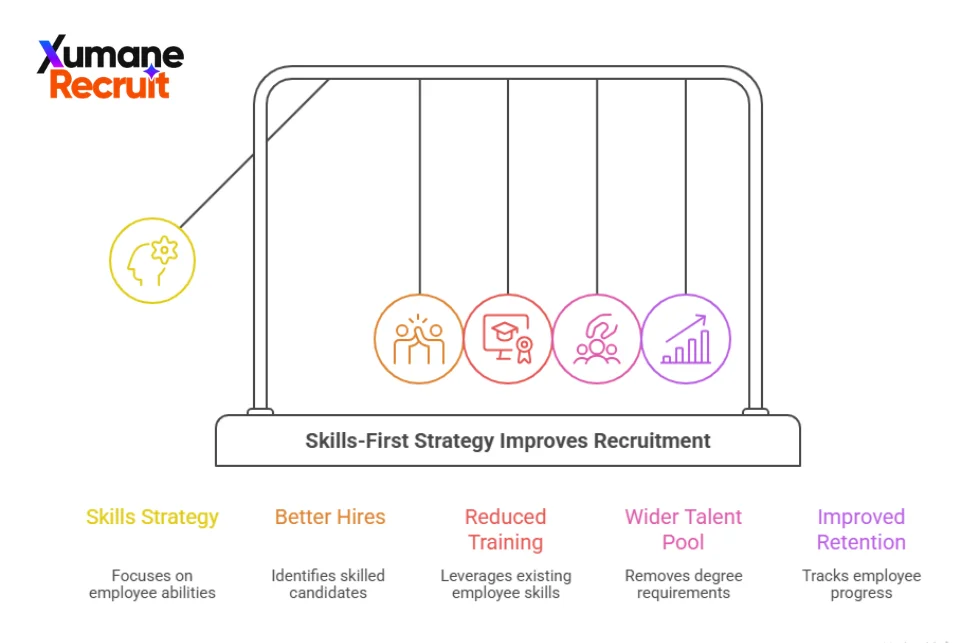
How to Build a Skills-First Recruitment Strategy Plan?
Step 1: The current abilities of the workers must be checked first. This is done through surveys because a recruitment strategy plan needs a strong base. It is claimed by experts that this helps the company decide whether to hire or train.
Step 2: Cooperation with the learning department is necessary. It has been observed that talent acquisition specialists' work is often separated from training, which is a problem. Working together helps everyone understand what programs are planned.
Step 3: Requirements for a university degree should be removed from the description of a working position. Many people believe that skills are more important than where a person was an educational institution student. This allows more people to apply for the working position.
Step 4: Interviews should be organized with specific questions. These talks show how a person learns when problems occur. Experts claim that these interviews predict success better than technical tests.
Step 5: Progress must be watched by tracking how long people stay and how well they work. It has been observed that this data is used so that the leaders see the value of the recruitment strategy plan.
How Can TA Specialists Champion Upskilling Internally?
A talent acquisition specialist can take the lead in these matters without waiting for others. Market data is shared with the heads of the company so they understand the need for training. Experts claim that internal movement should be given priority for new roles.
Relationships are built with managers to find people who have the potential for reskilling. It has been observed that partnerships with learning platforms help to create a pipeline of talent. A talent acquisition specialist becomes a strategic partner when they speak about growth.
What Are the Biggest Mistakes to Avoid?
Mistakes happen when training is done without a clear goal. It has been observed that money is wasted when the training does not help the business grow. Experts claim that every investment must connect to a gap in performance.
If the ideas of the workers are ignored, the program will fail. Many people believe that employees know what they need to learn to be better. A single plan for everyone is not useful.
Reskilling is not a task that is finished quickly because it must continue forever. It is thought that a culture of learning must be built. If the talent acquisition specialist and the training teams do not talk, problems will arise.
Real-World Examples Worth Learning From
Amazon spent 1.2 billion dollars so that 300,000 workers could receive new training. They focused on cloud systems because their business needed those abilities. Experts claim that this was a strategic move for their growth.
Accenture moved workers from old roles into roles for machine learning. It has been observed that their internal market allows people to move based on their abilities. Their success shows that titles are less important than skills.
AT&T also used reskilling so that their people could move into tech roles instead of losing their jobs. Many people believe that this saved the company from many problems. The lesson for every talent acquisition specialist is that investing in people is good.
Technology's Role in Skills-Based Hiring
In the year 2026, technology is used by every talent acquisition specialist to find the right people. AI tools are used to check the logic of candidates so that bias is removed. Many people believe that these digital tools make the recruitment strategy plan more effective.
Platforms for talent intelligence are used to see what gaps exist in the company. Experts claim that these tools help the talent acquisition specialist understand the workforce better. Personal learning paths are also given to staff through digital platforms.
The commitment to growth is shown to the world through recruitment marketing. It has been observed that candidates do research on the company before they apply. A talent acquisition specialist makes sure the story of reskilling is told clearly.
Building an Employer Brand Around Growth
The reputation of the company is built on the growth of the staff. Job seekers look for paths where they can learn new things. It has been observed that people want to work for a company that values curiosity.
Paths for career movement must be clear to everyone. Experts claim that leaders must be involved in these training programs. A talent acquisition specialist tells this story to the world so that top candidates are attracted.
Key Takeaways for Talent Acquisition Specialists
Upskilling and reskilling are not optional because they are needed for competition. It has been observed that the talent acquisition specialist is the leader of this change. A recruitment strategy plan must connect the goals of the business with training.
Technology is used to find gaps and reduce unfairness. Experts claim that branding the company around growth will keep the best workers. The talent acquisition specialist must work with other departments to succeed.
Frequently Asked Questions (FAQs)
Upskilling means improving skills in a current working position while reskilling is training for a new role. Both are considered important parts of a workforce plan.
It has been observed that hiring is better when a talent acquisition specialist understands training. Experts claim that this reduces the need for external workers and builds a stronger team.
A skills audit is performed first to see what is missing. Many people believe that starting with a small group is the best way to begin.
A recruitment strategy plan of this type looks at what a person can do rather than their degree. Experts claim that this evaluates a candidate with more accuracy.
Low-cost platforms are used by many companies to provide training. It is believed that the cost of not training is much higher than the price of the education.



 Vijay Kumar
Hiring right is the foundation of every successful organization.
Vijay Kumar
Hiring right is the foundation of every successful organization.