Subscribe to stay ahead with expert insights on ESOPs, smart ownership strategies, and more!
Editor's Note: The hiring landscape is evolving rapidly, and organisations that rely on outdated recruitment methods are falling behind. In this guide, we break down a modern talent acquisition strategy for 2026, explaining how companies can improve their talent acquisition process, reduce time-to-hire, and empower their talent acquisition team to attract and retain top talent in a competitive market.
Introduction
Your hiring isn’t broken because you’re not “trying hard enough.” It’s broken because the world of work has moved on, while many organisations are still running a talent acquisition process designed for a different decade. The result is slow hiring, unhappy candidates, burnt‑out recruiters, and mediocre fits.
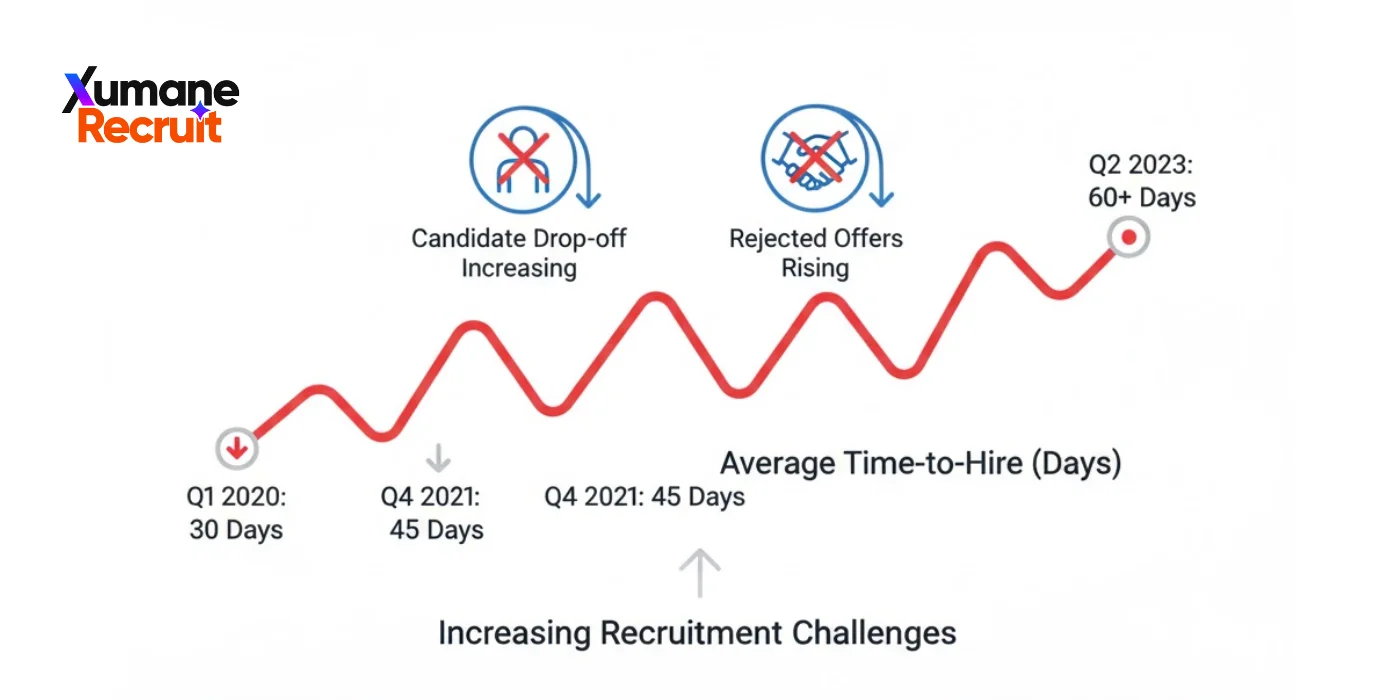
In 2025, the average global time to hire hovered around 40-44 days , meaning companies routinely spend more than five weeks just to fill a single role. In fast‑moving markets, that’s the difference between grabbing an A‑player and watching them sign elsewhere.
It’s time to rebuild your talent acquisition strategy from the ground up.
Why Traditional Hiring Is Failing in 2026
Several structural cracks are showing up in the typical talent acquisition process:
Time‑to‑hire is too long
Benchmarks indicate the global average time to hire is now over 40 days, often longer for technical and leadership roles. Every extra week increases the odds that your top candidate takes a competing offer.
The cost of bad hires is brutal
The U.S. Department of Labor estimates a bad hire can cost at least 30% of that employee’s first‑year salary, and broader research suggests replacing an employee can cost 50-200% of annual salary. That’s before you count morale and opportunity cost.
Candidate expectations have shifted
Talent expects transparency, speed, and meaningful conversations, not endless forms and ghosting. Yet many organisations still treat recruitment like a back‑office function, not a core customer experience.
Talent acquisition teams are overloaded
The average talent acquisition specialist is juggling requisitions, sourcing, screening, coordination, and employer branding with little automation and inconsistent processes. This results in burnout and inconsistent candidate evaluation.
When you zoom out, it’s clear that the problem is actually an outdated talent acquisition strategy that fails to treat hiring as a scaled, data‑driven product.
Blueprint Pillar 1: Design a Strategy, Not Just a Process
A modern talent acquisition strategy starts with three questions.
Who do we really need, how will we know we’ve found them, and what experience do we want them to have?
1. Start with workforce planning, not job descriptions
Your talent acquisition team should work with business leaders quarterly to map skills, not just headcount.
What skills will we be short of in 12-18 months?
Which roles are critical paths?
Treat hiring like capacity planning.
2. Define success profiles instead of vague requirements
Move beyond “5+ years of experience” and “strong communication skills.” Build success profiles that spell out outcomes for the first 6-12 months. This gives every talent acquisition specialist and hiring manager a shared lens for evaluation.
3. Turn hiring into a measurable funnel
Track your talent acquisition process like a revenue funnel.
Industry benchmarks show an application-to-interview conversion rate of around 15% and a shrinking time-to-hire when processes are optimised. If you don’t know your own funnel numbers, you’re flying blind.
This is where the talent acquisition team evolves from order‑takers to strategic partners, translating business needs into a robust, measurable talent acquisition strategy.
Blueprint Pillar 2: Rebuild the Talent Acquisition Process Around Candidates
Most hiring journeys still feel like they were designed for HR convenience, not candidate clarity. Fixing your talent acquisition process means redesigning every touchpoint with the candidate in mind.
Clarify the first steps
Start with job posts that describe outcomes and growth, not just tasks and requirements. A good talent acquisition specialist can translate a dry JD into a story that tells what the role solves, who they’ll work with, and how success is measured.
Streamline early screening
Replace unstructured, repetitive screening calls with a consistent framework, 4-6 core questions mapped to your success profile. This gives your talent acquisition team comparable data and reduces bias.
Communicate relentlessly
Sending timely, clear updates is one of the simplest ways to stand out. Given that time‑to‑hire now regularly exceeds five weeks, candidates will appreciate even a quick “you’re still in process” nudge.
Design interviews as structured assessments
Every interview should test specific competencies, with shared scorecards. This makes your talent acquisition process fairer and more predictive, reducing the odds of costly mis‑hires in high‑impact roles.
When candidates feel respected and informed, your talent acquisition strategy stops leaking great people halfway through the funnel.
Blueprint Pillar 3: Empower the Talent Acquisition Team with Data and Ownership
Your talent acquisition team can’t fix what it can’t see. Bringing data and ownership into their daily work is non‑negotiable in 2026.
Track the right metrics
Go beyond “number of hires.” Focus on time‑to‑hire, quality of hire (e.g., performance at 6-12 months), offer‑accept rate, and stage‑by‑stage conversion.
Give specialists clear swimlanes
Let each talent acquisition specialist own a function, region, or level. When specialists understand their niche deeply, they source better, screen smarter, and build reusable networks.
Bring hiring managers into the loop early
A strong talent acquisition strategy turns hiring managers into partners. Kick off each search with a 30-45 minute intake meeting, agree on a profile, timelines, and feedback SLAs, and then hold each other accountable.
Make retrospectives part of the process
After key roles close, hold short reviews and ponder on the following factors:
What worked?
Where did we lose candidates?
How did the talent acquisition process feel for the candidate and the hiring team?
Small continuous improvements compound over dozens of roles.
When the talent acquisition team owns real metrics, they stop being seen as “people who post jobs” and start being recognised as a revenue‑adjacent function.
Blueprint Pillar 4: Reduce the Risk and Cost of Bad Hires
Speed without quality is just a faster way to lose money. The economics are stark. A bad hire can cost at least 30% of first‑year salary, and some estimates place replacement cost up to 5x annual salary once you factor in lost productivity and re‑hiring.
To reduce this risk, your talent acquisition strategy should consider:
Structured reference checks that validate behaviours and outcomes.
Realistic job previews so candidates see the actual challenges of the role and self‑select out if it’s not for them.
Probation‑period feedback loops where hiring managers share what was missed (good or bad) in the talent acquisition process, so you can refine your signals.
Here, the job of every talent acquisition specialist is part detective, part advocate, digging for truth while championing strong candidates through the organisation.
Frequently Asked Questions (FAQs)
Recruitment is about filling open roles. Talent acquisition strategy is about systematically attracting, assessing, and retaining the skills your organisation will need over the next 1-3 years. The latter is proactive, data‑driven, and deeply tied to business planning.
There’s no single formula, but a common benchmark is 1 talent acquisition specialist for every 25-40 hires per year, depending on role complexity and tooling. Highly specialised or senior roles typically require lower ratios and more experienced recruiters.
Start where the pain is most obvious: long time‑to‑hire, high offer declines, or poor performance in the first year. Use data to find the biggest leaks in your talent acquisition process, then redesign that stage before moving on.
Set clear expectations, shared metrics, and SLAs. Run structured intake meetings and give hiring managers visibility into pipelines. When they see how a strong talent acquisition strategy makes their lives easier, partnership becomes much more natural.
Beyond sourcing and interviewing, they need data literacy, stakeholder management, and comfort with technology. The best specialists can read funnel metrics, challenge vague role definitions, and advocate for process changes that benefit both candidates and the business.
The companies that will win the next five years aren’t necessarily the ones with the largest budgets, they’re the ones whose talent acquisition strategy treats hiring as a strategic product, equips every talent acquisition specialist to act like an owner, and builds a talent acquisition process that candidates actually enjoy moving through.



 Tushit Pandey
Hiring right is the most important skill. After all, you bet on people, not on resumes and strategies.
Tushit Pandey
Hiring right is the most important skill. After all, you bet on people, not on resumes and strategies.